
LEED Certified Buildings, probably heard about green buildings becoming popular across India. But many buyers and investors still don’t fully understand why LEED-certified buildings are gaining so much attention. If you’re planning to invest in real estate or simply want a smarter living space, knowing these benefits can help you make a better decision.
What is LEED Certification?
LEED (Leadership in Energy and Environmental Design) is a globally recognized green building certification system developed to promote sustainable construction practices. Buildings are rated based on their performance in areas such as energy efficiency, water use, indoor environmental quality, and overall sustainability.
There are different certification levels—Certified, Silver, Gold, and Platinum—based on a building’s environmental efficiency. In India, LEED certification is becoming a strong benchmark for modern, eco-friendly construction.
Why LEED Certified Buildings Matter in India
India is experiencing rapid urban growth, which increases energy consumption and environmental challenges. With rising electricity costs and water scarcity, sustainable buildings are no longer optional—they’re necessary.
LEED-certified buildings help address these issues by reducing resource consumption and promoting eco-friendly living. As awareness grows, both developers and buyers are shifting towards greener choices.
Top Benefits of LEED Certified Buildings in India
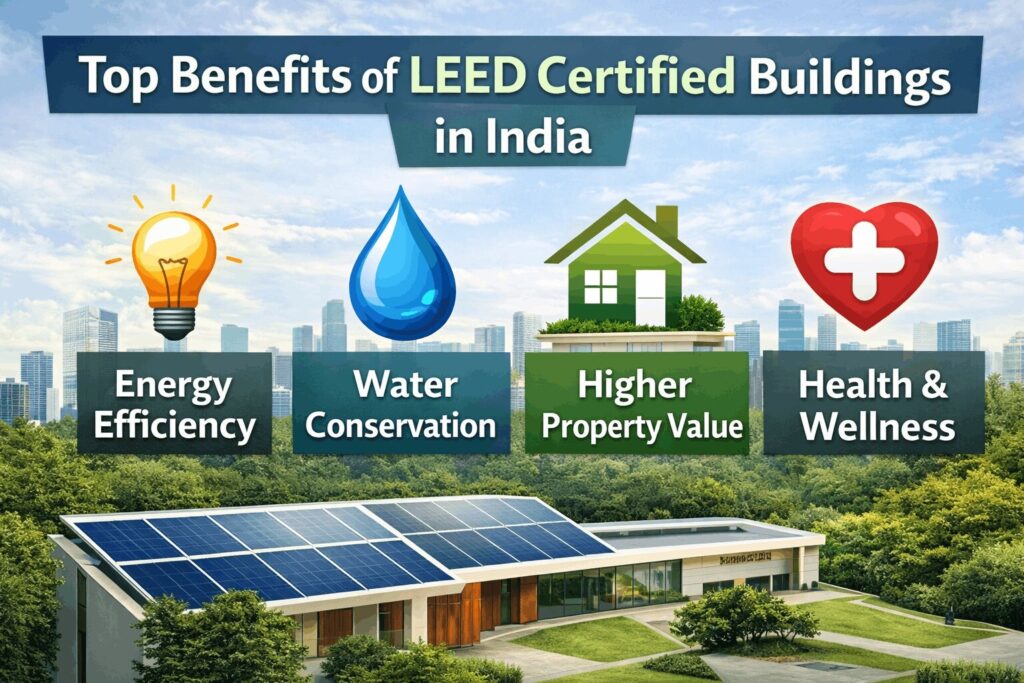
1. Energy Efficiency and Lower Utility Bills
LEED buildings are designed to consume less energy through features like LED lighting, efficient insulation, and smart HVAC systems. Many also use renewable energy sources such as solar panels. This results in significantly lower electricity bills, making them cost-effective in the long run.
2. Water Conservation
Water management is a major concern in India. LEED-certified buildings include systems like rainwater harvesting, low-flow fixtures, and water recycling. These features help reduce water wastage and ensure sustainable usage.
3. Higher Property Value and Better ROI
Green-certified properties are increasingly in demand. Buyers are willing to pay more for homes that offer lower operational costs and sustainability benefits. This leads to higher resale value and better return on investment over time.
4. Improved Indoor Air Quality
LEED buildings use non-toxic materials and advanced ventilation systems to maintain clean indoor air. This reduces health risks, improves comfort, and enhances productivity—especially important for residential and commercial spaces.
5. Reduced Maintenance and Operating Costs
Because of efficient design and durable materials, LEED-certified buildings require less maintenance. Energy and water savings also contribute to lower overall operating expenses.
6. Environmental Sustainability
These buildings reduce carbon emissions and minimize environmental impact. By using eco-friendly materials and renewable energy, they contribute to a greener future and help combat climate change.
7. Strong Brand Image for Businesses
For commercial properties, LEED certification enhances brand value. Companies operating in green buildings are seen as environmentally responsible, which can attract clients, investors, and employees.
Technologies Used in LEED Certified Buildings
LEED buildings incorporate advanced technologies to achieve efficiency. These include solar panels, energy-efficient appliances, smart automation systems, and sustainable construction materials. Many also use waste management systems to reduce environmental impact.
Are LEED Certified Buildings Worth the Investment?
While the initial cost of developing or buying a LEED-certified building may be slightly higher, the long-term benefits far outweigh the investment. Lower utility bills, reduced maintenance costs, and higher property value make these buildings financially rewarding.
From an investor’s perspective, green buildings are future-proof assets. As sustainability becomes a priority, their demand will continue to grow.
What’s Next: How to Get Started
If you’re planning to invest in a LEED-certified property, start by researching projects that highlight green features. Check for certification levels and understand the technologies used. Developers can also explore LEED guidelines to incorporate sustainable practices in new projects.
Conclusion
LEED-certified buildings are more than just a trend; they represent the future of real estate in India. From cost savings and better health to environmental benefits and higher returns, the advantages are clear. Whether you’re a homebuyer, investor, or developer, choosing a green building is a smart and responsible decision.